
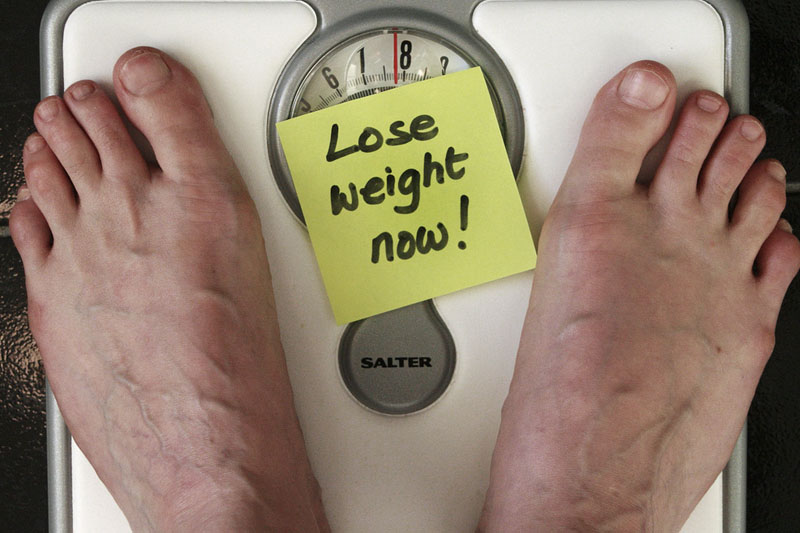
Have you been trying to lose weight to no avail? Here are 10 reasons why that’s happening and what you can do about them. I know losing weight isn’t easy and I hope this post will push you in the right direction.
This post is for people who aren’t at their ideal weight. It is not for people with medical issues, resulting in their inability to lose weight (for example, thyroid issues). It’s not for people who are underweight — if you’re already underweight (BMI under 18.5), you might want to look into how to *gain* weight, not how to *lose* weight. Strive for a healthy lifestyle and a healthy body, not an emaciated one. If you have bulimia or anorexia, please seek help as these aren’t trivial issues. There are many people out there who can help you and are waiting for you to reach out to them.
While I use the term “weight” in this article, I’m really referring to “fat.” You can gain muscle or become slimmer but still have the same weight. That means you’re healthier than before. Focus on fat loss and not just weight loss. Measure both your weight and fat percentage to have a full picture of your fitness condition.
Let’s start with the first reason you are facing a weight loss plateau…
1. You have too many reasons

Do you always have a reason not to exercise or eat healthy?
- “Oh I’m too tired to exercise. I’ll go tomorrow.” (And then you say the same thing tomorrow.)
- “I want to stick to my diet, but I’m also having a strong craving for X. I’ll restart my diet after I eat this.” (But you never do.)
- “I should watch my diet but it’s Thanksgiving/Christmas/Chinese New Year/[insert some celebration] and there will be lots of great food. I’ll return to my diet after this is over.” (Then comes the next event which makes you put off your healthy living plans yet again.)
- “I’m too busy to go to the gym. You guys go ahead without me.” (But somehow you still have time for Facebook, Youtube, and Twitter.)
How to address this
If you have been saying these things to yourself for the past few months, or even years, you should probably realize by now that it’s not really about the situation – it is about yourself.
Just like the people who sue McDonald’s for their obesity, you’re not going to lose your weight by pointing fingers at others or your circumstances, be it your parents, friends, environment, or the world. The minute you take responsibility for your current weight, you will realize it’s up to you to achieve your ideal weight. No excuses, no nothing. It’s up to you to set healthy living goals, create healthy living plans, and work on them, so you can start to live your ideal life.
Read:
2. You consume more than what your body needs
If you have excess weight on your body (due to excess fat and not muscle), that means you have been consuming more calories than your body needs (or at least you used to), which in turn has led to the excess calories being stored away as fat deposits.
How to address this
a) Take charge of your meals
Oftentimes, excess eating comes from not planning your meals. You eat based on your whims and fancies, without considering whether you need to eat or not. A little bit here and there, and it’s easy to see how the calories add up. Consuming an excess of X calories a day may not seem like a cause for concern, but imagine doing that every day. Overeating 500 calories a day means taking in an excess of 3,500 calories a week – equivalent to 1 pound of fat a week, over 4 pounds a month, and 52 pounds a year!!
Take charge of your meals. Identify your body’s daily energy needs (otherwise known as TDEE = Total Daily Energy Expenditure). Then, create your ideal meal plan based on your daily energy and nutritional needs. Then, follow it to a tee. The following tasks from my 14-Day Healthy Living Challenge will help you:
- Day 3: Create Your Calorie List
- Day 4: Calculate Your Total Daily Energy Expenditure
- Day 5: Create Your Ideal Meal Plan
- Day 6: Follow Your Ideal Meal Plan!
- Day 13: Start Your Healthy Living Guidebook
Meal planning lets you (1) take ownership of what you put into your body, (2) gain awareness of how much and what you should consume for the day, and (3) consume the exact food that is ideal for your body. This way, you won’t end up eating more than you should or eating food that is bad for your body.
b) Eat based on internal cues (not external ones)

A common reason for excess eating is that you eat based on external cues than internal ones (i.e. daily energy and nutritional ones). For example, eating…
- When you pass by a food stall / restaurant / kiosk.
- When people ask you to eat.
- When you are offered food.
- When it is the supposed meal time (8am, 12pm, 7pm) for the day.
- When people are eating.
- When you see food.
- When you are in a celebration.
- As long as there is food on your plate.
…as opposed to eating based on internal cues, namely (a) hunger cues (b) caloric needs (c) nutritional needs. You should use these three factors to guide your eating behavior since they are the very reasons humans eat to begin with. To survive and to have a high level of vitality for daily activities. Basing your eating on the wrong factors easily results in eating behaviors that spiral out of control and excess food intake being stored as fat.
Read: Step #1 of How to Stop Emotional Eating, A Crucial Guide, Part 2 on eating based on your needs.
c) Learn to say no
Learn to say no to others. You don’t have to eat just because others offer you food. Eat based on what your body needs (i.e. the daily meal plans you designed from the previous step) and not because others tell you to. Read: How To Say No To Others.
3. You turn to food for comfort (You eat not to fill yourself, but your emotions)
Rather than eat to feed your body, you eat to feed your emotions, such as when you feel unhappy, stressed out, anxious, angry, disappointed, empty, or [insert emotion here]. Bingeing is not uncommon to you.
Since eating triggers the release of serotonin, a hormone believed to contribute to happy feelings, you feel happy for a short while. It seems like the eating is justified because you emerge a happier person.
However, since food does not address the original issue, the issue arises again after a while. (See: 7 Reasons Emotional Eating is Bad for You) You keep eating to offset your negative emotions, to regain that feeling of peace. This creates an erratic eating behavior that has zero connection with your physical needs. More often than not, you eat more than what your body needs. (Read Point #2: You eat more than you should.)
This overeating builds up over time. You slowly gain weight. Before you know it, you’re heavier than you’ve ever been, which crushes your already diminishing self-confidence. You try to exercise but the calories you burn are not enough to offset the extra calories you consume from overeating.
Anguished, you turn to eating for comfort. This sets you off on a new cycle all over again, making you gain more weight.
How to address this
What should you do then? Start from the very root of it: your emotional eating behavior.
I’ve written a comprehensive 6-part series where I share how I overcame my emotional eating issues and how you can do the same too. Read: How to Stop Emotional Eating (6-part series)
4. You have false notions surrounding eating and food
Besides what’s covered in Points #1-#3, you carry false notions surrounding eating and food. For example, thinking that X food is good for your health when it isn’t. Thinking you need to eat when you don’t. Thinking eating is loving yourself when it’s no more a neutral activity like breathing and passing waste. And so on.
I had many such false notions as I shared in the How To Stop Emotional Eating series. They include seeing food as a symbol of love, thinking eating was a necessary part of celebrations, thinking I had to eat whenever I returned home (like a reward for a long day of work), associating certain food with certain messages which would result in random cravings out of the blue (e.g. eggs = goodness, chocolate = reward), thinking it was better to overeat than undereat (when both were equally bad), perceiving eating as loving myself (when it should be a neutral activity), among others.
These contributed to a very lousy eating pattern and poor eating habits. It was only by listing my false notions, sorting through them, and breaking every single one of those beliefs that I finally regained a normal relationship with food.
How to address this
How do you know if something is a false notion or not? If it subconsciously causes you to eat outside of (be it above or below) your daily energy expenditure, it’s probably a false belief. Food is designed for the purpose of fueling our bodies. Enjoy food as you eat it, but don’t make food your reason for being. Food can’t love you no matter how much you love it.
These articles will help you to address your false notions surrounding food and eating:
- How to Stop Emotional Eating, A Crucial Guide, Part 1: Tackling the Causes of Emotional Eating
- How to Create Real Change In Life: Address Root Cause vs. Effects
- How to Stop Emotional Eating, A Crucial Guide, Part 2: Rebuilding a Healthy Relationship with Food
5. You are not taking the right diet
I know some diets purport the view that a calorie is a calorie, but… I’ve come to discover that this isn’t the case for me. I’ve found that I can consume two diets with approximately the same amount of calories (I measure my food intake even) but different macro-splits, and have different results with each. Strange, but it’s true.
A recent research funded by the National Institutes of Health had obese participants follow three different diets with the exact same calories for four weeks. These three diets were: A low-fat diet, a low-carb diet, and a low-glycemic index diet.
In the end, it turned out that participants burned about 300 calories more a day on a low-carb diet than they did on a low-fat diet, and 150 calories more on the low-glycemic index diet than the low-fat diet. The researchers do not have a conclusive reason for why this happened, but they believe that it’s because the low-carb and low-glycemic index diets do not trigger a starvation response in the body (read Point #7: Your metabolism is out of whack) since they do not cause a surge and crash in blood sugar.
(Read more about the study: Low-carb diet burns the most calories in small study)
Weight loss efficacy aside, I also believe quality intake of food is important for good health.
How to address this
There are a lot of different (weight loss) diets out there. I’m not going to suggest what diet you should take; rather, I think you should read up about them yourself, experiment, and pick the one that is healthy and helps you lose weight most effectively.
Where quality of food is concerned, cut out junk food, fast food, highly processed food, deep-fried food, sugar-laden food, food with high sodium content (such as potato chips), and carbonated drinks. These food usually have a high level of preservatives and low nutritional value. I think there is no dispute that these are all unhealthy for you in the long run.
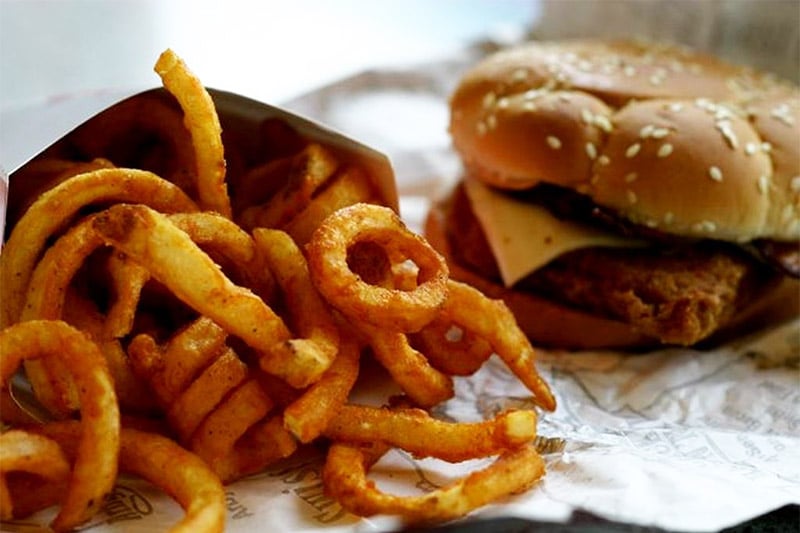
An interesting movie to check out is Super Size Me. It’s a documentary of a guy (Morgan Spurlock) who went on a 30-day McDonald’s-only diet, to become obese and experience a series of health problems. While there were questionable aspects about the way the experiment was conducted, such as the reckless way Spurlock ate, the film nonetheless established what many know but refuse to admit to ourselves – that junk food isn’t going to lead us to good health.
Personally, I used to be an advocate for fast food (up till my teens), but I’ve since stopped eating it. Today, I hardly consume junk food. To be honest, it just doesn’t look appetizing to me anymore.
6. You don’t work out
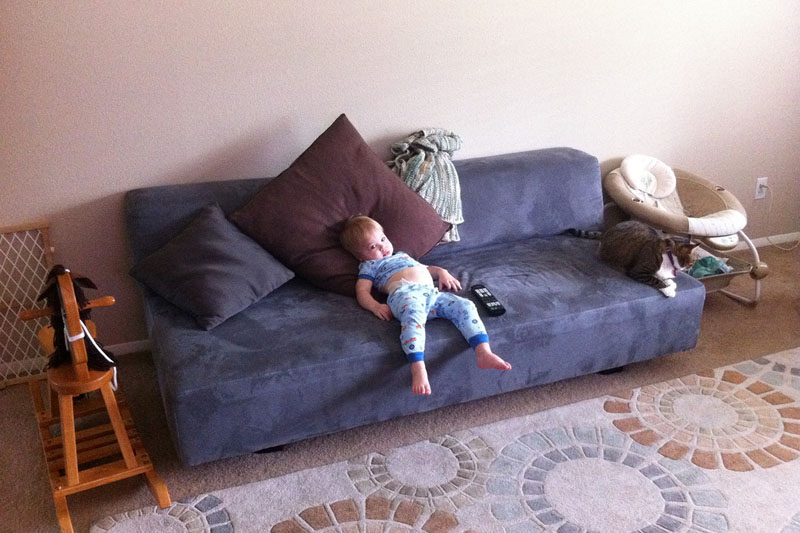
Your life is marked by sedentariness. Wake up, eat, sit, use the computer, lay on the couch, watch TV, lie on the bed, sleep. You don’t exercise, you don’t do any physical activity, you don’t get your body moving at all. The cycle starts all over again the next day.
How to address this
Firstly, start exercising. At least three times a week, 30 minutes each time. This is the recommended regime for weight maintenance. For those who want to lose weight, step it up by exercising more regularly every week, and for 45 minutes to one hour for each session. Don’t exercise more than one hour per session as it has been shown to have diminishing results on weight loss (due to the body being overworked and cutting back on its metabolic rate instead).
When you exercise, incorporate resistance training (muscle building) and cardio (aerobic exercise). There are many arguments surrounding whether cardio is good or not. It’s up to you on which argument side you want to take. I think doing both in tandem is essential to proper weight loss. I personally enjoy cardio and having a good sweat and that’s why I continue doing it. At the same time, I also intend to incorporate resistance training sessions into my fitness regime soon.
If you find it hard to exercise because there are no ready exercise facilities near you, or because of constantly changing weather conditions, you may find home aerobic videos helpful. Youtube has many such videos you can peruse. Read: How to Workout Whenever and Wherever You Want
Secondly, as you incorporate exercise into your life, incorporate more physical movement into your daily activities too. Instead of driving to a nearby store, walk. Instead of taking the elevator, climb the stairs every once in a while. Rather than laze around and watch TV in the evenings, go out for a nice evening stroll.
7. You have low metabolism
Scenario A: Zero weight loss despite following plan
If you have been consuming fewer calories than your TDEE and exercising without fail for weeks without losing any weight at all, it’s possible that your metabolism is out of whack.
This happens when you have a history of yo-yo weight loss (losing a lot of weight quickly only to regain it back), bulimia, anorexia, starvation diets (where you consume a ridiculously low number of calories), or excessive exercise regimes (for example, doing two to three hours of cardio every day, without fail). These practices then cause your body to run on a basal metabolic rate (BMR) that’s lesser than someone of the same height and weight as you have.
The reason why such practices have damaging effects on your metabolism is because:
- They reduce your lean body mass. When your body gets a severely reduced food intake, it turns to your next available energy source – your muscle group – for energy. However, muscle burns more calories than fat on a per-pound basis. You want to preserve muscle, not burn it. The more muscle your body burns, the lower your BMR becomes.
- They put your body in “starvation mode.” This means your body creates a lockdown on its energy reserves (which is the excess fat you want to burn off) because it thinks that it’s in a famine and it needs to preserve its energy. What ensues is a counteracting situation where your body learns to run on lower calories a day, perhaps due to reduced fidgeting, or other reasons. The lower your daily food intake, the further your body reduces its daily calorie expenditure. Instead of losing weight, you maintain it. Once you start eating more, your body quickly piles it as excess weight/fat. This is especially so since it’s under the impression that it needs to store fat lest it runs into more “famine” situations like this in the future. (Read: Starvation Response on Wikipedia.)
Scenario B: Weight loss plateaus after initial weight loss
If you lost weight initially on your weight loss plan but you have trouble losing weight after several weeks despite following your plan 100% to a tee, it’s likely because (a) your body has adapted to your new calorie levels and exercise regime, resulting in lower TDEE than before, or (b) your body composition has improved (fat loss has been replaced by muscle gain, leading to no changes in weight).
How to address this
If it’s due to (b), that’s not exactly a case for concern. Continue your plan and track your body composition as well to get a more holistic picture. At the end of the day, fat loss is really the ultimate goal. Gaining muscle is good as it helps you burn more fat and it makes you leaner and stronger.
If low metabolism is your problem, here are some ideas to break weight loss plateaus:
- Increase meal frequency: Eat five to six small meals per day.
- Time your meals: Eat approximately every three hours, with a substantial breakfast and a substantial post-workout meal. Don’t skip meals and have one big fat meal at the end of the day. It’s a sure way to fail in your weight loss efforts.
- Avoid starvation levels: Maintain a small calorie deficit and avoid starvation-level diets. (Suggested safe levels for fat loss: 2100-2500 calories per day for men, 1400-1800 calories per day for women; adjust as needed. American College of Sports Medicine (ACSM) recommends 1,200 calories as the minimal daily calorie level for women and 1,800 as the minimum for men.)
- Eat natural: Select natural, unprocessed whole foods with a high thermic effect. (Lean proteins like chicken, turkey, egg whites, and fish are highly thermic, as are all green vegetables, salad vegetables, and other fibrous carbs.)
- Take diet and exercise breaks: Avoid prolonged periods of aggressive caloric deficits. This might lead to a slowdown of your metabolism as your body thinks that it’s starving. I personally recommend resting every three days or six days of dieting (or exercising). Having a rest day doesn’t mean that you go all out and binge—please, no. It means you don’t restrict your calories, so a good benchmark will be to eat in line with your maintenance calories, give and take 5%. After the rest day, continue with your usual diet.
- Carb cycle. Maintain a calorie deficit that’s optimal (see #3). But increase your calories periodically to keep your metabolism and appetite-regulating hormones at the normal level. Instead of the carb-phobic diets that millions of people follow (which can actually suppress hormones like thyroid and leptin), carb cycle with a high-carb refeed every fourth day or so.
- Weight train: The basic exercises that include the largest muscle groups or even call into play the entire body as a unit. (Squats, front squats, split squats, deadlifts, stiff-legged deadlifts, overhead presses, all kinds of rows and core-activation exercises) will have a much greater metabolism stimulating effect than isolation exercises (concentration curls, calf raises, etc.,).
If you want to read further about metabolic damage:
- Metabolic Damage: Why It Happens, How to Avoid It and How to Fix It
- How to Repair a Damaged Metabolism
8. You have an endomorph body type
Endomorphs tend to retain fat, leading to a weight-loss plateau
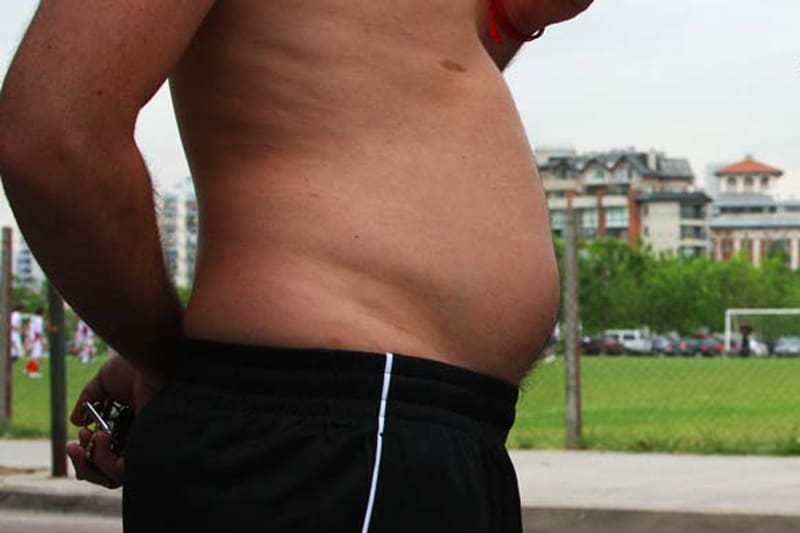
Endomorphs have it harder than other body types when losing weight (as opposed to ectomorphs and mesomorphs) because the endomorph body type is predisposed to storing fat than losing it. If you’re reading this article, you may well have the endomorph body type.
What characterizes the endomorph body? Here are some simple indicators (From Tom Venuto’s Burn the Fat, Feed the Muscle):
- Wide waist and hips
- Waist dominates over the chest
- Tendency to always store excess calories as fat (can’t get away with overeating)
- Keeping fat off after it is lost is a challenge
- Tendency to be sluggish, slow-moving, and lacking energy
- Fairly good strength levels
- Extremely difficult to lose weight (requires great effort)
- Tendency to gain fat easily as soon as the exercise is stopped
- Respond best to frequent, even daily, training
It’s possible that you were born an endomorph, due to genetics.
It’s also possible that you were not born with the endomorph body type, but you messed up your metabolism in the past (read Point #7: You have a low metabolism), leaving you with an endomorph body.
How to address this
It doesn’t really matter that you have the endomorph body type as much as it’s about what you do about it. The endomorph body type is not a bad or good body type per se; it just is.
If you consider this from a different point of view, having a body that is resistant to fat loss is actually a good thing. It means your body is functioning as it should. Our bodies are designed to store fat as a self-preservation mechanism. As an endomorph, if you are ever in a famine, you have a much higher likelihood of survival than others! So who has the better body type here?
While the endomorph body type makes it harder to lose fat, this doesn’t mean it is impossible. It just means you have to adopt the right strategy for weight loss. Remember, you would never have acquired excess fat in the first place if it hasn’t been for wrong eating habits at some point in the past. What matters most is what you do with what you have got, rather than put blame on others or feel bad about it.
Here are four ways to address this:
- Consume a mucusless diet. There are foods that cause mucus build-up in the body, causing the body to retain extra weight. These foods include sugar, sodium, processed food, and dairy products.[2] When you stop eating these foods, you’ll notice that your body drops extra weight right away, even when you consume the exact same calories a day. (Read Point #5: You are not taking the right diet.)
- Increase your training. This means increasing the duration (length of each session), frequency (number of times you exercise a week), intensity (how hard you work out during the session), or a combination of the above.
- Frequency: For an endomorph, the metabolism is usually quick to decrease after each exercise. Hence, endeavor to be in motion as often as possible to keep your metabolism up. I don’t think exercising all 7 days a week is necessary unless you personally want to. Over-exercising may lead to backfiring, as the body might become over-trained, which leads to a retention of water. (Read Point #9: You might be retaining water.)
- Duration: 20 minutes is a maintenance workout for endomorphs. For maximum fat loss, 30-45 minutes of continuous aerobic activity is recommended. In some instances, it may be necessary to go as long as 60 minutes until a goal is achieved.
- Intensity. If you’ve been doing the same exercise at the same pace during your sessions, perhaps it’s time to up the ante. After a while of doing the same thing, your body adapts accordingly, and it actually takes less effort to do it. This means your body also requires fewer calories to perform that routine. Hence, see if you can push yourself and take things to the next level. If you run, try to run faster, and/or longer. If you weight train, try to lift heavier weights. And so on.
- Be more active. Get active and stay active! You have to get moving! Take up some sports or recreational activities in addition to your regular workouts in the gym. In addition, it is important that you make a lifelong commitment to fitness rather than go for quick fixes because constant activity is important to keep your metabolism at a healthy level.
- Use metabolism-stimulating exercises. Weight training exercises that utilize large muscle groups like the back and legs are extremely effective for stimulating the metabolism and for stimulating the hormones that increase fat burning. High-rep compound leg exercises (squats, lunges, leg presses, etc.) are particularly effective for this purpose.
More about endomorphs:
- Endomorph Body Type
- “Unexplainable” Fat Loss Plateaus… Explained!
- Once an Endomorph Always an Endomorph? (Can Your Body Type Change?)
9. You might be retaining water
Sometimes you hear of people who do absolutely everything by the book with limited to no results. Exercising every day without fail. Pushing themselves during their exercises. Exercising for a longer duration than ever. Dieting in line with their calorie limits. Eating within the suggested macros. (It is said that there is no one “magic” macro and different macros work for different people.)
Yet, these same people weigh the same, if not more, day after day. They look almost the same too.
If so, we might be looking at the issue of water retention here. What causes water retention? There are three popular theories which I will explain below.
a) Increased presence of cortisol
The first theory is the increased presence of cortisol, a hormone the body ejects in times of:
- Physical stress, such as exercising, lack of sleep
- Low glycogen levels, which happens when you restrict calories
Prolonged elevations of cortisol can lead to (a) massive water retention; (b) gluconeogenesis, where glucose is obtained from non-carbohydrate sources, such as muscle; and (c) reduction of bone formation.
Cortisol levels decrease when the source of physical stress is removed and when glycogen levels are raised. As such, it helps to:
- Have a regulated exercise regimen. Exercise hard, but don’t go overboard, especially if you are just starting on your regime. Have 1-2 rest days for every 3-4 days of intense exercise.
- For dieting, have a maintenance day for every 3 days of dieting. This also helps to boost your metabolism. (Read Point #7: Your metabolism is out of whack.)
- Feed yourself with simple carbohydrates (such as fruits) or starches (such as potatoes and rice) as your post-workout meal. Exercising leads to depleted glycogen levels and doing a carb refeed after that will be important.
Read more:
- Factors generally reducing cortisol levels
- Factors generally increasing cortisol levels
- Cortisol and Lifting: Limit Your Workout Time
b) Storage of water in fat cells
Sometimes, you see cases where someone is working out and/or dieting like crazy but still looks and weighs the same (if not more). But after a period of time, the person suddenly loses a ton of weight (as much as 3-4 lbs) and looks dramatically skinnier overnight. WHOOSH! Just like that. This is known as the “whoosh” effect.
The common explanation is that after fat cells are emptied of stored triglyceride (during exercising and dieting), they are refilled with water. It is said that this is because the body does not know if the fat cells will be needed in the future, which is why it refills them with water first, just in case. What this means is that there is no immediate reduction in your body weight or appearance, despite having experienced fat loss.
To make matters worse, it is unknown how long such water retention can last. Sometimes it can be just one week. Sometimes it can be one month. I have not read of cases where it goes for more than one month, though I wouldn’t be surprised if it does last that long.
Using body scales that measure fat does not help because most of them use hydration to measure body fat levels. This means they wind up registering a high figure for your body fat percentage due to the water in your fat cells.
Then, after some magical period of time, the water is released and your fat cells shrink, thereby causing the “whoosh” effect. The person looks like he/she lost weight overnight, without doing anything different.
While this sounds logical in theory, it can create a very frustrating situation where the person thinks that what he/she is doing isn’t working, and abandon his/her weight loss plans altogether.
The thing is, the person is doing everything right. In fact, he/she is losing fat correctly. It’s just that the water retention has masked the fat and weight loss, making him/her think that he/she is doing everything wrong. It throws things off-scale (no pun intended) because the primary source of feedback (one’s weight and appearance) in weight loss has stopped becoming reliable. If he/she has persisted, he/she would have seen the change in a matter of time.
What should you do then? Here are some tips:
- Stop being reliant on the number on the scale as the indicator of your success. Focus more on adhering to your diet plan and exercise regime. You can track your weight every day if you want, but don’t use that as the sole determinant of whether you are doing things right or wrong. Recognize that while fat loss can be linear, weight loss just isn’t.
- Drink plenty of water. The body tends to retain water when you have low water intake.
- Avoid high sodium. Presumably, you should already have a low-sodium diet if you have a clean diet, void of junk food, fast food, and highly processed food. If not, then please cut them out.
- Be persistent. I know it is extremely frustrating. I experience it myself and I feel it’s a very annoying problem. But if you have been doing things by the book and if you have not strayed from the plan, then there is really no reason to wonder whether you are doing things wrong. Have faith and continue with your plan. Know that going on a binge fest and abandoning your weight loss plan definitely will not help.
If the issue of stagnated weight loss lasts for more than two months, then it’s unlikely that water retention is the issue. You should either re-evaluate your weight loss plan and/or see a medical doctor to check if water retention is indeed an issue.
Read more:
c) Upcoming menstrual cycle
It is known that women retain water during the days leading to their menstrual cycles and up until the days they are over.
This is perfectly normal. Follow your usual regime and don’t panic. Know that whatever increases in your scale is from water retention (assuming you have been following your plan without fail) and it will go away after your cycle.
10. You keep self-sabotaging
So let’s say you have thoroughly addressed the 9 factors above, but you still have trouble with your weight. If anything, you eat in a frenzied fashion sometimes, and you gain more weight with each passing month.
If so, perhaps a part of you is self-sabotaging your fat-loss efforts.

If so, I can relate. Many of my overeating episodes in the past stemmed from anger at myself for failing (yet again) in my diet. Eating was a great self-punishment tool since it would detract me from my weight loss goal. I was also very inferior about my body, and being fat was my way of avoiding my body image issues. (It was an all-or-nothing mindset. I was never fat or obese, but I was often not at my ideal weight.) A part of me also secretly wanted to be fat, because I hated myself and it was my way of making the self-hate easier.
Many overweight people use their excess weight as a barrier to protect themselves from the world. Perhaps being heavier makes things easier. Perhaps being heavier makes them more accepted so people will not be jealous of their bodies. Perhaps being heavier helps them hide their shame and unhappiness. Perhaps being heavier keeps other people away.
How to address this
What should you do in such a situation? I’ve outlined an exercise in Thin You, “Meet” Not-Thin You which you will find highly, highly important. In the exercise, you get to meet the not-thin part of your consciousness in understanding his/her reason for being. People who lose weight but regain it every time do so because there is excess weight in their consciousness that remains. Until they lose that “weighty” part of their consciousness, they will find it almost impossible to keep their excess physical weight off permanently.
At the end of the day, self-hate and body image issues are both very deep issues that can’t be resolved overnight (the latter is a topic I intend to cover in the future). The easiest way is to start loving yourself – one step at a time. It may not change the situation right away, but it will trigger the start of a healing journey.
Remember that weight loss is a science, not an art. As long as you kept at it, you’ll achieve your end goal. Self-sabotaging only thwarts your attempts; it won’t get you any further.
Read:
- Thin You, “Meet” Not-Thin You
- Are You Sabotaging Yourself? How To Stop Self-Sabotage
- How a Relapse Begins: The Key To Removing Bad Habits
Endnote
I hope this article has given you some ideas on how to break your weight loss plateau. If you have a friend who is not at his/her ideal weight, pass this on to him/her.
Take responsibility for your weight and your health. It starts today.
Check out related articles:
- Thin You, “Meet” Not-Thin You – The spiritual aspect of weight loss.
- How to Stop Emotional Eating (series) – Comprehensive 6-part series on how to stop emotional eating once and for all.
- 25 Tips To Lose Weight – My recommended tips on how to lose weight in a healthy, sustainable way. See it as a list of physical to-dos and tips.
- Develop a Good Habit in 21 Days – It takes 3 weeks to make or break a habit. Cultivate positive habits to aid you in your weight loss.
Check out these inspiring stories of amazing people who were once obese, but lost their excess weight because they took charge of their lives:
- 8 Amazing Weight Loss Success Stories
- More Weight Loss Success Stories (Women’s Health Magazine)
- Amazing Weight Loss Success (MSN, Fitbie)
Get the manifesto version of this article: 10 Reasons You Are Not Losing Weight (And How to Fix Them) [Manifesto]
(Images: Weighing Scale, Umbrella, Emotional Eating, Eating, Fast Food, Couch Potato, Fat belly, Unhappy)


 I hope you find my content helpful. Join my community of 65,000 readers and get my latest articles delivered to your inbox. Your email is safe and I never send spam.
Sorry, but this is a Terrible article! Everyone says the same thing and it hasn’t worked. “Just have some self control!” ” Exercise you are lazy!” “Just Quit eating!” If that had any impact everyone would be skinny. Same tired message will not motivate the obese. This was a time wasting read.
I’m not sure if you even read this article, but nowhere does it say “Just have some self control!” ” Exercise you are lazy!” “Just Quit eating!” or even anything close to these points. Unfortunately your comment was very much the time-wasting read to quote your words.
Really? I think i read it thoroughly. Here are YOUR points:
Doesn’t matter if your environment is not conducive for healthy living. Sure it helps some, but if you are truly serious about healthy living, nothing can stop you.
. The minute you take responsibility for your current weight, you will realize it’s up to you to achieve your ideal weight. No excuses, no nothing. It’s up to you to set healthy living goals, create healthy living plans, and execute them, so you can get started on living your ideal life.
“Learn to say no”
“You don’t work out”
It’s an old and tired message repeated millions of times. Literally. For the record i don’t have a weight problem but I do see that the obesity problem isn’t getting better and this message you repeat? It’s useless. They need something else. Though admittedly, i, too, am at a loss as to what.
Thank you Celes for this graet article. The parts on water retention and plateaus brought some clarity to my mind. I noticed that when my life gets more stressful (without a change in my diet) I gain some weight cause my body ratains water and goes on starvation mode. It is so hard to account for all the factors in your life and make it really balenced.
We are warm blooded animals. Most of the food we eat does not go towards doing anything other than generating heat. If we reduce food intake markedly in my view the body just decides to reduce its heat output (it maintains core body temp by other means eg less blood flow near the surface of the skin, less sweating etc)
So for those who go on too few a calorie diet in my view the body resists this by lowering considerably the rest heat it generates.
For most men around 70kg is ok and for that weight you need to eat about 2300 calories a day. The aim should be the calories needed for a specific weight, not to lose weight by restricting calories to the bare minimium.
Thank you for all of your tips. I am still losing weight. (Down about 20 lbs and 10 to go.) I am always looking for answers when it is difficult for losing weight. I apprecitae your medical reasons as it helps me understand better.
I like to do two types of exercise. I was about 40 lbs over weight. Cardio works pretty well but what really helped was strength training/weight lifting. (I am a woman and did not get big like Mrs. Schwarzeneger.) It just helps you lose weight quicker.
I am so motivated that I am now a trainer. Thank you.
Mrs. Schwarzeneger, lol ))
Celes, I am so glad that I came across this article again. I remember your original article “11 Blatant Reasons You Are Fat (and why you will continue to be)” and was so upset and offended by it that I wrote to you personally and also posted in the comments section. It is very uplifting to see that you read the comments from people and really took it to heart. This article addressed all of the issues that I had with your last one – this article is full of helpful and insightful information that is factual and well-meaning sans a condescending tone. You also included medical reasons for obesity – something that was missing from the previous article. Your tone, in general, is much more caring and less judgmental. Thank you for listening to us. Thank you for this great article. I unsubscribed because of the previous article, but you have just won me over again!
Just updated the post with one new factor (see point #9 on water retention).
About 65% of our health is genetic, including a “good” BMI (18-24). Most Americans are above 25. Food is too cheep. Fat is less costly than protein. We value “desk work” over trade work. Even the trades have specialized to the point of excessive repetitive activity.
I suggest eating 70% fruit, 20% protein and vegetables and 10% whole grain bread. Spend half a day working outside. See what happens.
Run for fun.
Awesome advise!!! Thanks so much Celes!!!
No problem! Thanks for your comment Deb and I’m glad you found the article helpful! :D
how can we circulates this information out there because a lot of people are still ignorant of the facts about there over eating.
Feel free to share the article with other people you know! :)
Commenting for this post is closed.