
(Image)
Are you a materialistic person? Do you use material and physical goods, such as money, luxury items, car, and property to feel happy? These physical goods can be anything, including what seems like daily necessities, such as your mobile phone, camera, mp3 player, and clothes.
A materialistic person is vested in owning material possessions and equates them to happiness. This is especially so if the ownership of possessions is motivated by emotional reasons (such as to look better, to feel better, to convey a status symbol) rather than functional reasons (to improve productivity, to communicate with others).
Materialism has become a trend in our society. Just look at the constant, growing fixation on earning more money and owning material goods. At the same time, we are now materially better off than we have been, looking at our all-time high consumption of mobile phones, computers, and cars.
Based on that, you would think everyone should be happier today than ever. But, are we?
Our Unhappy Affluent Society
Apparently, it’s not so. In The Affluent Society, author John Kenneth Galbraith claimed that despite society’s increasing wealth, people are not happier. In fact, they are now unhappier. He claimed that materialism has bred discontentment.
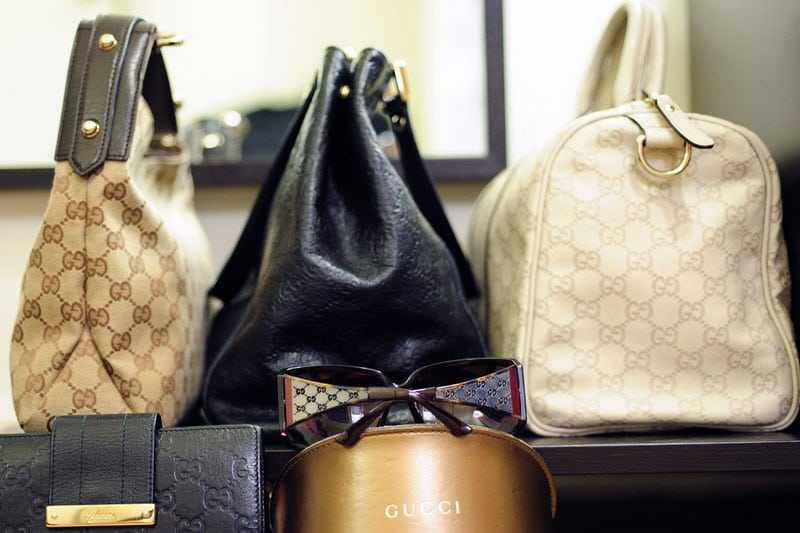
I first read about this during a marketing class in college, when I was 20. At that time, I thought the claim was ridiculous. I used to be quite materialistic then. By materialistic, I don’t mean hungering for branded goods like Gucci, Prada, etc. — I never cared for such stuff — but being focused on buying things, getting new clothes/shoes/etc., which is materialism in itself.
As a teen, I was frequently shopping with friends and checking out the latest fashion trends. Having grown up in Singapore, which became very materialistic over the years, I aspired to earn more money and get material goods such as a convertible and a large property. After all, I was taught by teachers, schools, media, etc. that they were the most important goals to work for, something that I shared in my purpose story. When you live in a city with extravagant shopping malls everywhere and billboards of fancy clothes, food, and things to buy, these become the things you aim for by diffusion.
This was the same for those around me. Everyone around me aspired to earn more money and own material possessions like new clothes, new makeup, a car, etc. as we believed they would improve our lives. This was further reinforced by my personal experience — as a teen, I would feel happy when I got a material item I had been yearning for, and this was so for my friends too. Having more money meant having the means to get the things that I wanted. Having more money meant being better off than if I had less money.
Intuitively, you would think that people with huge wealth and material possessions would be happy.
The Illusion of Material Possessions
After I started living more consciously in 2006, I began to question the role material goods play in our lives.
For example, I used to feel great gratification whenever I acquired a material possession I had been longing for. However, this gratification was usually fleeting. It was a matter of time before I would look at the same thing and not get that same reaction. This time would range from a day to a year, but usually shorter than longer. I never thought much about this and just continued acquiring more things to feel happy. I just thought it was normal — society is evolving, my needs are changing, I’m earning more money, and hence I have higher expectations to keep up with.
However, the act of acquiring more became a cycle, to the point where I couldn’t help but notice something was amiss. It felt strange. If these material possessions supposedly make me happy, why do I have to keep getting more to be happy?
After much reflection, I started to understand what Galbraith meant by “materialism breeds discontentment.” It turns out that Galbraith wasn’t crazy like I had thought — he was really smart to identify this problem way back in 1958. I imagine that materialism was a budding problem back then, but it has evolved into a full-scale phenomenon today. It is precisely the act of materialism that prevents people from becoming truly happy. In fact, materialism causes people to be unhappier in the long run. If you are hearing this for the first time, this concept may seem absurd. I will explain what I mean for the rest of the article.
Material Possessions: Artificial Symbols of Happiness
When you probe deep into our desire for material possessions, you will find many false beliefs. We look upon material possessions as a bridge to our ideal lives, to increase our happiness, to improve our life satisfaction, to boost our confidence, to feel more attractive, and so on. We see material goods to improve our quality of life. It seems our problems will disappear or be reduced with these material goods. Material possessions have turned into symbols of hope and joy. However, these symbols are no more than just artificial creations by people.
Advertising has a large role to play in that. As someone with a Marketing background, I’m in a good position to speak about this. Marketers invest billions a year in ads which create these linkages in our mind. Without them, we would not associate these material possessions with these positive emotions.
So how do marketers do it? First, they use market studies to identify your dissatisfactions which can be low self-esteem, loneliness, dissatisfaction with work, unhappiness in life, etc. They also create an image of your aspirations — love, happiness, acceptance, self-worth, and more. They design marketing strategies that link their products to this ideal image. Whether this is true or not is something to be challenged.
Let’s say X company has a skincare range. Their target audience is women from 25 to 35 years of age. They find out that in today’s world, women of this age group are fearful of not being good enough. They address this fear by having control: control in their career, romance, and life path.
X company then creates a marketing campaign about how their skincare range is for modern women who want control, because their products can help them control their skin’s aging process, which gives them control in their life.
This product-image linkage is conveyed in all aspects of marketing: from product design to packaging to advertising. In advertisements, the visual look, audio cues, and television commercial scripts are consciously crafted to convey this message.
All products have this product-image link created in advertisements, especially for brands driven by image (meaning luxury brands). Some examples are cars, fashion products, phones, cameras, perfumes, and even properties. It can also apply to household brands such as shampoo and toiletries. Every brand has its own personality.
Ask the average modern person what he/she thinks about Nike, and you will get adjectives like “just do it,” “freedom,” “liberty,” and “empowerment.” Or if you ask someone what he/she thinks about Apple, and we are likely to hear things like “being different,” “cool,” and “stylish.” Would people have this association if they were never exposed to these brands or their marketing? For example, ask someone from a tribe in Uganda, who has never seen modern advertisements — would they have such thoughts about these brands? Most definitely not.
Think about other brands you often see and examine the thoughts and feelings you get from them. Would you have these thoughts if you have never been in contact with their marketing?
As people get exposed to these marketing stimuli, the product begins to represent a certain image in their minds. People with aspirations similar to the product’s image desire to own it. These people work hard to acquire these possessions because owning them makes them feel like they are working on their problem. When they eventually acquire the possession, they feel happy, albeit briefly.
The Cycle of Materialism
However, when you probe deeply, materialism prevents people from being truly happy. It is a catch-22 where the very reason that created the situation prevents it from being solved.
When it’s time for a new product launch, like perfume variant #284 or lipstick color #583, marketers start to link people’s aspirations and the promise of happiness/confidence/love/etc. with these new products.
The end result? You become dissatisfied with your current possessions and seek to buy new things. You purchase these new items to be happy and discard your old products. This leads to the continuous cycle of purchase.
Materialism Breeds Discontentment
While all these are happening, your issues never get addressed. They remain there, untouched. While you strive to buy material possessions to be happy, it keeps you from working on your inner issues.
This is why materialism breeds discontentment. Materialism prevents you from addressing issues that will lead to real happiness. When you are materialistic, you base your satisfaction on material possessions. However, physical goods only act as a temporary placeholder to cover up your gaps. They are impermanent and external. They are not who you are.
While the physical goods will change and be discarded over time, you don’t. You are the constant that remains. The issues will be there until you address them. Instead of looking outward at material goods, you need to address these issues from within.
Breaking Out Of Materialism
By hinging on material possessions to be happy, you are stuck in the loop of materialism. It’s tricky because you get a false sense of joy when you get something new or get more wealth, especially if your reason for acquiring it is for emotional than functional reasons. This false sense of joy reinforces your desire to get more of it. It becomes a form of subconscious conditioning, where the positive reinforcement you get from the initial purchase triggers you to continue the behavior to get more of the “reward.” Material possessions become your go-to solution to solve dissatisfactions and life problems. It becomes sort of like an addiction.
The only way materialistic people can break the cycle is to step out of their belief system and examine the notion that material goods bring happiness. This can happen when someone keeps getting material possessions to be happy, only to notice that there’s no endpoint. Your moods become tied to your purchase of goods and wealth. Despite all the things you acquire, your feelings of dissatisfaction are always there, never going away. This dissatisfaction stays until you put a stop and decide that enough is enough.
Achieve Happiness Without Material Possessions
When I became conscious of the false connection between material possessions and happiness, I began to break out of it. Quitting my day job and not having an income in 2008 was an excellent chance to dig into the material side of me. Whenever I wanted to buy something, I would ask myself: “Why do I want this? What’s making me want to buy this? What is the gap I’m trying to fill with this purchase?”
Many times, my probing led me to uncover insecurities I was not aware of. When my purchase desire is triggered by an unhappiness, I would instead identify how I could address this unhappiness from within, rather than buying the material good. This was very helpful in my self-discovery.
During this time, I broke through the illusion that society and media keep enforcing — that material goods will bring us happiness. My emotional attachment towards money, clothes, accessories, and physical goods disappeared. What was left in their place was just the functional value of these objects. With the exception of what’s needed to get by in life, these material goods became nice-to-haves, where my happiness is not anchored on them.
For example, I’m no longer interested in shopping. Whenever I pass by shopping malls with friends, I don’t have an urge to buy stuff. On the rare occasion when I do buy something, my gratification is never the same as in the past. I buy things for the functional value, not for the emotional or self-imagined value. I buy a new piece of clothing because I really need it, not to add to a collection of barely worn clothes. Same for shoes, etc. I have given away most of the stuff I don’t wear (use) and I barely buy new stuff now.
Today, my relationship with material goods and money is totally different from in the past. This is liberating because I no longer base my happiness on my possessions. Whether my bank account has a lot or a little money, it doesn’t change the way I feel about myself. Whether I’m wearing fancy or simple clothes, it doesn’t change how I feel about myself. Regardless of what I wear or what I have, it doesn’t affect how I feel.
Probe into your materialistic tendencies
Ask yourself:
- Are there any material possessions you aspire to have to be happy?
- Why do you need them to be happy? What emotional benefits do you hope to get out of it? Each emotional benefit represents a certain gap in you. For example, if you want to buy something to be more confident, it means that deep down, you don’t feel as confident as you would without it. If you want to buy something to feel more attractive, it means you don’t feel as attractive without it.
- Instead of jumping to get that material possession, think about how to resolve this dissatisfaction from within. What can you do to resolve this dissatisfaction without material possessions? How can you attain happiness without material possessions?
Don’t look towards material possessions as your source of happiness, because you will hit a dead end with this path. Material possessions are just a temporary ornament in life. Instead, work on achieving happiness from within, independent of material goods and wealth. That’s where you will find an unwavering source of happiness and contentment. :)
Read as well:


 I hope you find my content helpful. Join my community of 65,000 readers and get my latest articles delivered to your inbox. Your email is safe and I never send spam.
While I do agree with most of the points of this article, how do you think that this would apply to entertainment-related products? (books, games, music, movies etc)
For example, let’s say you have a favourite music artist and you buy all of their albums (and let’s assume you want to support them and thus don’t steal their music off the internet or off your friends) On the one hand, obviously you don’t actually need the music for anything practical, but on the other, if you derive enjoyment and use it enough to be worth the money and you absolutely love it, would it be such a bad investment? Of course, you probably shouldn’t be so hasty to buy that one song that you might sort-of like. (I guess it’s the difference between buying that super-expensive designer bag and that super-expensive designer bag that would be durable and of the right size for your annual camping trips with the family) What do you think?
I’d say the difference between conscious purchasing and materialism/consumerism boils down to two big factors: (1) need vs. want and (2) what we’re trying to get out of this purchase.
So (1) is where it gets ambiguous because need vs. want is very, very subjective. Someone may feel like he/she absolutely needs to buy all the albums of his/her favorite artist to support him/her, while to another this may be excessive. As opposed to trying to define this grey line, it’s more helpful to outline the absolutes and use them as guidelines of reference: I personally would define an unconscious, unnecessary purchase as say, someone who buys a lot of CDs yet doesn’t listen to them at all; on the other hand, I would define a conscious purchase as someone who buys the CDs/albums that he/she does like (this may well be all of them) and listens to regularly, even using the lyrics as personal reflection, personal relaxation music, etc. Someone who purchases all the CDs but only listens to 2-3 every now and then probably falls in the in-between area.
For (2), if someone keeps buying/purchasing (CDs, movies, etc.) as a way of feeling good about his/her life, as a way of vicarious living, then maybe those are just empty purchases, just a way of putting off living. I actually do know someone who has a huge DVD collection, maybe a thousand, I don’t know. His house is literally filled with DVDs. There’s nothing wrong with buying DVDs of course or watching movies–I do that myself–but when done so excessively, it sort of makes one wonder if there’s a gap the person is filling in his/her life by way of movie-watching / DVD-purchasing.
As you have rightly pointed out, everyone’s litmus is different. Some people may not define purchasing a super-branded bag that he/she uses often as materialism, whereas I personally will never spend several grand of my money on a branded bag when I can get a perfectly durable, fashionable, and uniquely designed bag at a regular shop. It’s more important that one is conscious of the concepts of materialism/consumerism, and uses these as guiding points to reflect on his/her purchase–and not to purchase unconsciously or to fill an emotional/life gap, but to purchase consciously.
My way to tackle this is to donate a large portion of your income every month away, and think what the money can do to other people in need if you dont spend it on the products.
I’m 30 and my whole life I have always strived for the beautiful house, the nice car, the latest electrical equiptment etc etc. I thought that these things would make me happy. Everytime I gained these things though, I found that I wasn’t that interested in them anymore. Therefor I would be looking for the next best thing.
I also thought that by having these things, it was a visual way of showing people that I’m successful.
Only problem with all this is that (besides not being happy) there was always something bigger and better that I wanted. I couldn’t afford to keep updating everything and that would lead me to feel inadequate and depressed.
This is (as always) very informative. I recently got rid of my truck. It was big and was fully loaded. It did everything but drive itself. I now have a $300.00, 1989 Chrysler New Yorker that I am driving and I couldn’t be happier. I don’t miss the payments for the truck and I know that my money can now go to better things (like charities, etc.) and things that really matter to me.
It’s embarrassing now, but having things like the truck was just a status thing…like “look at me…look what I drive.” I think there is so much of it that we grow up thinking there is nothing wrong with it. We all need to have more of a “help others” attitude. I promise it will be more rewarding that cruising in a truck/SUV/BMW/Lexus, etc.
This post and CG Walters’ comment reminds me of a phrase I’ve heard uttered many times, including in some songs etc. “The slave becomes the master and the master becomes the slave.”
It isn’t that material possessions are bad or wrong. It’s that without careful consideration and conscious living, we become the possessed by our possessions. And we’re often almost completely blind to that fact.
Thank you for this post, it’s got me thinking about some of the things I buy and want to buy. Yet another opening for me to introspect and learn about myself and find opportunities for growth. I appreciate all the work you’re doing for people. Again, thank you. :)
Very good points.
I tend to think that it is not only material possessions that burden us with undue expectation and distraction, but rather the clinging to any possession, including that of ideas and ideals.
Not that one must live devoid of possessions, just insure that we are the possessor–know it for what it is–not the one possessed.
blessings and continued inspiration,
CG
When I dug deeper at the material needs that I thought I’d like to have, I realized that what I was really after was freedom. It’s still true today. I enjoy the flexibility of working from home. I like the idea of taking a holiday as and when I want to. The space that allows me to attend to the needs of my kids at a whim’s notice is comforting.
I see material possessions now as a support for a bigger more inspiring dream. It is not the material possessions that I’m after. But the lives I hope to change from the work I do. I am not going to deny that I need a laptop or a home office (which requires money) to bring my work into fruition.
A bottom article.why is family neglected?
Why is the war?
Why are there more poverty and in the other hand so much richness?
Why is there exploitation?
Why is there drug addiction?
Why are we harming the all planet?
If we think the cause of substance is the materialism.
There’s a lot of thought-provoking insight here. Much of the world lives beyond its means and beyond its needs (unfortunately). We’re always in the “want want want” mode and we don’t stop to take the time to talk with our children, our parents, or whomever.
Excellent post!
It is interesting to see that the US is not the only one stuck in the mire of materialism. The world economy is reaping the “benefits” of the greed of materialism. It is sad that more people can not be happy with what they have. As you pointed out in your “Are you rich” post, we make more than 97% of the world. When is enough….enough!!
Great post- Stumbled!
Hi Celes
Your post resonates and I feel that much of what is wrong with Singapore Inc in using money and materialism to denote success and happiness. That is why the ministerial pay issue keeps being raised in online forums and discussions. MONEY per se is not the only benchmark to denote quality and service.
Singapore is way too materialistic in that most decisions are made based on costs-benefit analysis without too much consideration of other aspects. For too long, many of us have been sleepwalking and existing by working/studying/consuming our way through life rather than to really consciously live life.
Be well and prosper.
Commenting for this post is closed.