What Childhood Stories Are You Reenacting in Your Life Today?

Lonely childhood

Many years ago when I was a small child (I’m 28 as of this year), there was a point when I thought I was going blind. I accidentally got soap into my eyes while showering and my eyes stung and smarted thereafter. I thought that the smarting would stop after I finished showering, but it didn’t. In fact, it became worse.

As a little kid, I completely freaked. I thought that I was going to lose my sight and become blind for the rest of my life.

Frantic, I bugged my mom, who was doing laundry then. I wanted her to take a look and assess the condition of my eyes. I wanted my mom to sweep in, swoop me up (metaphorically), and let me know that I would be fine. I wanted my mom; I needed my mom.

So I tugged at my mom’s shirt in a bid to get her attention. “Mama, there’s something in my eyes,” was what I said. “Mama, there’s something in my eyes,” I repeated.

Alas, her response was not what I had hoped for. Instead of care over me in a delicate, nurturing manner as I had hoped she would do, my mom snapped at me in a highly agitated and annoyed tone.

“Stop disturbing me! Can’t you see I’m very busy? Come and bother me later, alright?” she bellowed to me in Mandarin as she tried to shake me off.

My whole world fell apart that day. As a little child, I could not believe that my own mother would tell me that at a moment when I really needed her. There I was, looking to her for love, support, and reassurance at one of the scariest points of my life up till then, and there she was, refusing to acknowledge my cry for help. I was crushed.

My eyes turned out fine but my mental state, not so much. That incident instilled a subconscious belief that I was not an important person. I didn’t know it then, but it marked the starting point in my life where I would think of myself as an unimportant person in the world (usually subconsciously than consciously).

My belief was this: If I was unimportant to my mom who was supposedly the most important person in my life (at that point), then how important could I be to anyone else, really? And if my sight, what I regard as my most important sense, could not even stack against something as trivial as laundry, then really, what could ever be important about me?

I grew up having issues with being ignored, regardless of whether the act was deliberate or not. I grew up doubting my value (as a person) in others’ eyes, often concluding that people did not find me important enough whenever things didn’t go my way.

Childhood Stories

I just shared my story of how I came to have issues with being ignored and how I came to doubt my worth in others’ eyes. However, what I really want to talk about today is the idea of childhood stories.

What are childhood stories? They are events that happened to us when we were a child, which became etched in our consciousness thereafter. (Those of you who attended the August Self-Esteem Webinar might remember me covering this concept during the webinar.)

All of us have childhood stories. They could be monumental events that shook our world when we were young, such as our parents’ divorce, being abandoned by our mother or father, being in a car accident, or losing our homes. They could be one-off incidents, such as the time when your mom slapped you, when you were berated of doing something you did not do, when you were backstabbed by a good friend, or the example I shared of myself in the opening. They could be a life-changing stage in our lives, such an abusive relationship, a highly stressful period, or a painful childhood.

Childhood

While I use the word “childhood”, “childhood stories” are definitely not just limited to our childhood. Childhood stories can come from any part of our past, such as teenage years or early adulthood. The reason why I coined the term “childhood stories” is because our childhood years are often the formative years of our lives—that is the period when we are the most impressionable. In fact, it is said that the formation of our life scripts is mostly complete by the age of seven.

Why Uncover Childhood Stories?

It is important to gain awareness of our childhood stories, because these stories will enact in our lives over and over again otherwise—without us realizing it.

For example, for the longest time up until I unrooted my childhood story (the one I shared in the opening of the article), I had serious hangups with being ignored.

If I ever had important correspondences that went unanswered (after a period of time), I would feel annoyed. “Why is this person not responding?” I would wonder. “Doesn’t he/she know that it’s very rude to ignore others?” I would wonder if I wasn’t important enough for the person to type even one lousy reply via text or e-mail. I would wonder if there was something wrong with me. I would sometimes wonder if the person would have responded if I was someone else. I would then conclude that I or my request simply wasn’t important enough to that person and I would do better focusing my time and energy somewhere else.

It doesn’t matter if my conclusions were true or not (for what it is worth, they probably were true sometimes and not true at other times). The point is that these “why”s and “what if”s were totally unnecessary. Even if they were true and I was on point in my hypothesis, it was none of my concern. Whether the person wanted to respond or not was up to him/her. What I should have focused on were the things I could effect, such as following up when I did not get a response after X days, writing a more compelling message, and reaching out to other people who could assist me. These were constructive actions that would make a difference; the psycho-analysis and hypothesizing of the situation were not.

It was after years of witnessing this cycle of thinking that I finally realized that there was something going on behind the scenes—I wasn’t reacting to the people ignoring me, but simply enacting a childhood story. As I broke down the situation, I realized that my issues with being ignored could be traced back to that childhood incident when my mom pushed aside my cry for help. I was making those same conclusions I made during that one incident over and over again, whenever a similar event occurred—even when those conclusions were way off base.

Gaining consciousness of this link helped me to unchain that old story from my consciousness, see that childhood incident as what it was, and stop the pattern of self-defeatist thinking from reenacting itself.

What Are Your Childhood Stories? Five Steps To Unchain Your Past from Your Present

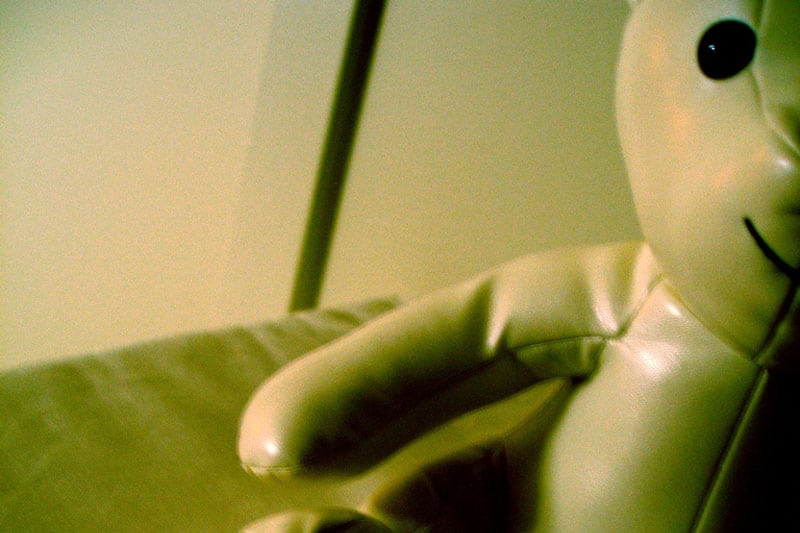
Childhood Bear

If you want to create a future independent of your past, you need to unchain your present from your past. The way to do so is to acknowledge your childhood stories, realize that they have no place in your life today, and start your life on a clean slate. Here are my five steps to get started:

  1. Identify a childhood event or episode that left an impression in you. E.g., when your mom slapped you, when you let your team down in a school sports relay, when your dad scolded you for not scoring full marks in that Math exam, when your teacher said you were a lazy, good-for-nothing, when you failed to make it to your desired college because you fared poorly in your leaving examination, when you were abandoned by your parents, or when your parents separated.
  2. What beliefs or conclusions did you form as a result of that event or episode? E.g.,
    1. Being slapped by your mother. Conclusion: “My mom hates me even though I’m her child. I’m undeserving of love.
    2. Letting your team down in a school sports relay. Conclusion: “I’m talentless in sports. I will only be a burden to others in whatever sporting activities I join. I should not join any more sports-related activities in the future.
    3. Being told that you were a lazy, good-for-nothing student by your high school teacher. Conclusion: ”My teacher accused me of being a lazy, good-for-nothing student even though I’ve been trying my best. It shows that it doesn’t matter what I do; people will still brand me as being a lazy good-for-nothing. I shall truly be a lazy person from now on and prove everyone right.
    4. Being reprimanded by your dad for not scoring full marks in a Math exam. Conclusion: “I disappointed one of the most important people in my life because I couldn’t even do something as simple as score full marks in a Math exam. I’m a failure; I will always be a failure.
    5. Not being able to make it to your desired college. Conclusion: “Everyone but me is able to get into his/her desired college. I’m a failure and I’m destined to be a lesser character in life.
    6. When you were abandoned by your parents. Conclusion: “Nobody wants me. I am all alone in this world.
    7. When your parents separated. Conclusion: “I’m the reason for my parents’ failed marriage. I cause grief and anguish to whoever’s lives I touch.
  3. Are the beliefs true? Challenge them.
    • For the beliefs you had formed, are they true? They might have been true for that one incident, but are these beliefs 100% true across all situations, throughout time?
    • Chances are, you will find that those beliefs are not true at all. In fact, they were probably just hasty conclusions you made at that point when you were down and confused. Those beliefs were probably not true even for that one incident too.
    • For example, the beliefs which I took away from my childhood story were: “I am not important” and “My mom hates me.” However, are they true? My mom had hollered at me while she was doing laundry not because she didn’t think that I was important, but because she had associated laundry with fulfilling her duties as a good mother—something which she considers with high regard, even today.

      Hence, when I disrupted her mid-way through her task, she saw it as a threat to her role as a mother, which led her to react so violently. It wasn’t that she didn’t care about me; it was just that she had attached completion of household chores as part of being a good mother, and did not realize that my immediate needs should have taken precedence over doing laundry at that point.

      For more on my relationship with my parents, read: How I Found Peace in My Relationship with My Parents (series)

  4. Have you been replaying this childhood story? Review your life since that childhood event or episode. Have you been reenacting that story in your life? How have you been doing that? Likelihood is that you have been replaying that story in other parts of your life thereafter.

    In my case, I continuously replayed my childhood story by thinking that I was unimportant and others found me unimportant whenever I was “ignored” (defined as when I had “cries” for help that went unanswered). These conclusions had nothing to do with the incidents and everything to do with my childhood story. I was damaging my soul every time I repeated this self-defeatist thinking pattern, which was clearly bad for my well-being.

  5. Unchain your childhood story from your life. This final step is easy once you recognize that the belief(s) which you formed from that childhood event or episode has been false all along (see Step #3). It’s then about consciously letting go of the story and making a decision to write your life on a clean slate.

    If you have trouble unchaining the story from your consciousness, here are some helping questions for you:

    1. What did that event or episode mean to you?
    2. Why are you still holding on to it?
    3. How can you start letting go of this past?

    For those with Be a Better Me in 30 Days Program, Day 25: Forgive Yourself is about letting go of the past by forgiving yourself. Many times, we do not let go of something because deep down, we fault ourselves for that past incident. Only by uncovering the self-blame and making a conscious decision to forgive ourselves can we then start the healing process and move on to a brighter future.

Share Your Childhood Stories!

I shared my story in this article. How about you? Do you have any childhood stories which left an impression in you? Have these stories been reenacting themselves in your life? Why? And how can you stop them from replaying from now on?

Share them in the comments section—I would love to hear from you. At the same time, please share this article on Facebook or Twitter if you have found it useful. Thanks; I really appreciate it!

 Images: charamelody, brainblogger, [Sazzy B]

Related Posts Plugin for WordPress, Blogger...

« Prev: The Day I Became a Pickup Artist (End of the Date Coaching Series)
 
Next: Art of Conversing: Do You Meet these 10 Rules of a Great Conversationalist? »

Email This Post Email This Post


  • Sharon

    I was very young. Still in primary school I think and my parents often have friends over. Once my mum fried some fish balls. I remembered some of them being burnt and she told me that we’re only allowed to take the burnt ones.

    Somehow this incident stayed in my memory through all these years. I’ve yet to let it go because time and again, my mum has been doing things like this to maintain her “face”. Like how I offered her some money to renovate the house, especially the toilets as they were old. She prefers to use the money for the common toilet where guests will use instead of the one near our bedrooms which all 4 of us (siblings) use and thus is wearing down faster.

    How can I reframe these and get over it? It is not helpful to my mental state. I’ve accepted that she’s too old to change herself so the only way is for me to change my own thinking but how?

    • http://personalexcellence.co Celes

      Hey Sharon, try doing steps 2, 3, and 5 of the exercise. Let us know how your results are when you do them.

    • Bob

      Hi Sharon,

      I sympathise my mother had similar ways of thinking.

      A positive point – is that some people think that you should always give your best. For example you give your guests your bedroom, your best food and so on. It helps others to give their best as well. This isn’t always the case as some people just take, take, take and criticise. In which case it is time to review your friendship and giving because you don’t share the same beliefs.

  • Bryan

    when I was 15 I was mugged on the train by three guys. it was really scary and it left me feeling helpless and vulnerable. Fortunately when i got into college i started taking tae kwon do and I’ve made a lot of progress (I’m a blue belt right now) however I realized i had a discomfort of sparring because sometimes i wouldn’t get hits in and that would make me feel helpless. Getting beat up wasn’t as bad because i’ve been through worse (mugging) but being competitive I felt kinda at loss when i didn’t do as well as i expected.

    These days I started letting going of winning or losing and focused more on doing. I also see I’m not as helpless as I think and that if i didn’t get mugged I wouldn’t have taken tae kwon do, and would’ve missed out on something that I find helps define me ;)

    • http://personalexcellence.co Celes

      Hey Bryan, good on you for making the best out of a negative event and using that as an impetus to learn a new skill. :D Thank you so much for sharing your story; it is really very inspiring how you did not let that event scar you, but in turn turned that into a positive point in your life (since it was the trigger point for you to learn TKD).

      I like the point you mentioned about focusing on doing rather than winning or losing. I think it’s all about being in the moment and focusing on the process rather than being obsessed with a certain end point. I’ve always been aware of that, but your comment has brought it back to my attention and reminded me the importance of doing it. Thank you! :)

  • http://www.CoachingWithChristina.com Christina

    Hi Celes,

    This is such an important issue–thank you for bringing awareness to it. I really believe that our fears and blocks can be traced to a specific incident when we were younger (and sometimes recent) and play out in ways we don’t realize.

    I just recently realized that I stopped acting (theatrically) around the time I entered middle school and had to deal with “mean girls” like in the movie. It made me not want to be seen. Just recently I’ve been rediscovering acting, modeling, dancing, and making videos. I used to say no to opportunities like that before. Now that I’m saying yes, more are coming in and I’m finding that I’m ready to be visible.

    ~Christina

    • http://personalexcellence.co Celes

      Hey Christina, I’m happy for you that you are ready to be visible now. It feels like Law of Attraction at work! :D When you are ready to receive something, the universe will start sending these things your way.

  • http://cupidselves.com Christina 2

    Well, this is timely. I was reading Margaret Atwood’s Cat’s Eye today, and finally had to put it down because I got so upset. There’s a long stretch of the protagonist being bullied by her friends at age 8-9, constantly being told she’s not good enough, or that she’s not doing the right things.

    This hit me so hard, because I realized that the very same thing had happened to me at that age. I was a happy, confident child and felt very secure in my skin. I’ve often wondered what happened to make me feel so inadequate, even 35 years later. Reading about it happening to someone else really opened my eyes, and made me realize that my so-called best friend from that time was instrumental in tearing me down. It was like she didn’t have a good day unless she made me cry.

    My family was poor (something I’d never even thought about) while hers was well-off, and my time with her was spent under a constant barrage of criticism of my clothes, the way I did things, the house I lived in, the car my parents drove, the way my family did things, and on and on. Even a few years after that, I didn’t remain so sensitive to all of that and could laugh it off coming from anyone else. But to always hear that from someone who was supposed to be my friend was devastating.

    It’s now that I realize that I haven’t been the same since. I’ve often wondered where that nagging voice of “you’re not good enough” came from, since I grew up very loved and supported by family and nearly all of my friends. I guess it took just one person at a particularly vulnerable, formative time to do a lot of damage. I feel relieved discovering this, though. Now that I know where it came from, I can work on letting it go.

    (The friendship ended around the time I was 10. It wasn’t acrimonious- we just drifted apart, and always remained on friendly, though superficial terms. I’ve had a chance to get to know her as an adult, and she seems like a nice person. I’ll probably never trust her, though)

    • http://personalexcellence.co Celes

      Hey Christina, thank you so much for sharing your story. Funny how conversations we had when we were young continue to stick around in our subconsciousness well into our adult years, huh? Such is the power of our childhood stories. Like you said, now that you know where it came from, you can work on letting it go (steps 3 to 5 of the exercise will be very useful for this purpose).

      With regards to this “you are not good enough” voice, I want to add that you are not alone in facing this voice. Many readers of PE often mention having this belief about themselves. I want to let everyone know that there is never a “good enough”; it’s about being the best at *every moment* and ensuring that we are striving for the best we can be. We should not strive to be like others or to be anything other than the best standards of ourselves.

      The comparison article covers this in detail: http://personalexcellence.co/blog/comparing/

      • http://cupidselves.com Christina 2

        Thanks,Celes!

        Love the comparison article. It’s something I need to be reminded of all the time.

  • Daniel Pelzl

    There was a family story about a person who was not able to buy war bonds during the First World War and was put in jail. This was acted out in my life when faced with the opportunity of learning a new language.
    I get these uncomfortable feelings that I will be considered unacceptable speaking German, French or Spanish. In a recent class reunion I was told that I was remembered for hardly speaking at all. This was a shocking revelation but true. I still find that keeping quiet is my default mode. I need to start a blog.

    • http://personalexcellence.co Celes

      Hi Daniel, thanks a lot for sharing. Starting a blog would be a first step to getting yourself heard and finding your voice. Even participating in forums, attending meetups, and being an active part of conversations with friends and acquaintances alike will be greatly helpful.

  • Bob

    Hi Celes,
    I found this lovely quote on forgiveness.
    Forgiveness is the economy of the heart… forgiveness saves the expense of anger, the cost of hatred, the waste of spirits. Hannah More

    • http://personalexcellence.co Celes

      What a beautiful quote. Thanks so much for sharing Bob – I shall include that into the selection of quotes on PE quotes. Right now I have quotes scheduled till December, so it will be up in the month of Dec.

      • Bob

        You’re welcome Celes :D ,
        I love reading your ever expanding list of quotes. I heard or read somewhere that if we took all the old sayings, quotes and pithy expressions and lived by them, that they would give us an excellent foundation to live our lives.

  • http://selfhelpandtransformation.blogspot.com zimkhitha

    I just want to thank you for reminding those of us who are parents about the effects of our words to kids. The responsibilities of parenting can be so stressful as a result we just lash out at our kids without thinking things through.

    • http://personalexcellence.co Celes

      Hey zimkhitha, it is my pleasure. I’m glad that my story has helped to drive awareness for us as children and parents (for those of us with kids) alike. It is definitely very true that parents play incredibly important roles and have a huge part to pay in the character and belief formation of children.

  • Miss Elf

    Hey everyone and my darling Celes :D
    I remember one day me and mom were watching TV and she was crying (there was nothing sad on TV, it was just Karaoke show). I remember being concerned for her and I asked her: mom, what is wrong? And she said with a rude tone in her voice: You should never ask me that again!! I am not sure what effect had that on me, but I am guessing: I guess I felt rejected, she didnt even try to explain to me how and why she is crying. Today I notice I rarely doubt about what say people who I see them that they are “more than me” – that I dont see them equal to me, like authority for example: what my boss says, I believe that is true, I dont think with my own head, I am not thinking about that it can be different and how it could be different. And I dont ask additional questions about the matter, although its not all clear for me (I dont get it completely). Its like: well, if my boss says so, he knows best… With doing so, I also avoid the responsibility. I guess :)
    By the age of seven, our emotional body or our inner child dies – he dies, so he could survive. He dies, so he can protect himself from additional emotional pain… If he dies, he doesnt feel it. But he doesnt just disappear.When we are adults that inner chil is still there, crying, waiting for us to tell him that everything will be ok. So we create situations in our life that enables us to finnaly face the pain and process it. I read that in books and it sounds logical :) A book from Michael Brown; The presence process: describes how that works. And it takes you through 10 week process: exercises helps you to bring those supressed feelings and emotions to surface and it gives you the chance to deal with them (to wake up your emotional body/your inner child).

  • Miss M

    Celes, I enjoy your insights and wisdom so much–i look forward to your articles.

    Several years ago I received one of those “fill out your life story” journals, and found myself unable to . I could not think of a single good story to write, despite knowing that there HAD to be many. I imagined my daughter coming across it someday and being upset by how sad and bitter I was regarding my childhood, and my parents.

    I think the “childhood story” that has affected me in that regard has taken over my life. When I was 25 and 7 months pregnant and in a miserable relationship, I asked my mother to allow me to move back home. I was told I should stay where I was and be happy ANYONE would put up with me.

    So, as that was my mother’s opinion about me–the person who knows and loves me best–this changed everything about me. I have no self-confidence, I dont trust anyone, etc, etc. I do not have a good relationship with anyone.

    Mom has been dead for years now, and I still can’t get over it. Any advice?

    • http://personalexcellence.co Celes

      Hi Miss M! Thanks so much for sharing your story. Try the five steps as I have shared in the article – they work regardless of who the person is or whether the person is still around. These steps are about working the stories out of our inner consciousness, the existence and truth of our stories is independent of the people involved, and has everything to do with us and our perceptions of ourselves/the world.